Building strong business credit is essential for entrepreneurs who want to grow their companies and access better financing opportunities. Business credit allows companies to qualify for loans, credit lines, supplier financing, and other financial products without relying solely on the owner’s personal credit.
Establishing good business credit also improves credibility with lenders, vendors, and financial institutions. Businesses with strong credit profiles often receive better loan terms, higher credit limits, and lower interest rates.
What Is Business Credit
Business credit is a financial profile that represents the creditworthiness of a company. Similar to personal credit scores, business credit scores measure how reliably a company pays its debts and manages financial obligations.
Credit reporting agencies collect financial data about businesses and assign credit scores based on payment history, outstanding debts, and financial stability.
Lenders, suppliers, and financial institutions use these scores to evaluate the risk of extending credit to a business.
Why Business Credit Matters
Building business credit provides several advantages for companies. One of the most important benefits is easier access to financing. Businesses with strong credit scores are more likely to qualify for loans and credit lines.
Another advantage is separating personal and business finances. This protects the business owner’s personal credit from being affected by business-related financial activities.
Strong business credit also allows companies to negotiate better terms with suppliers and service providers.
Register Your Business Properly
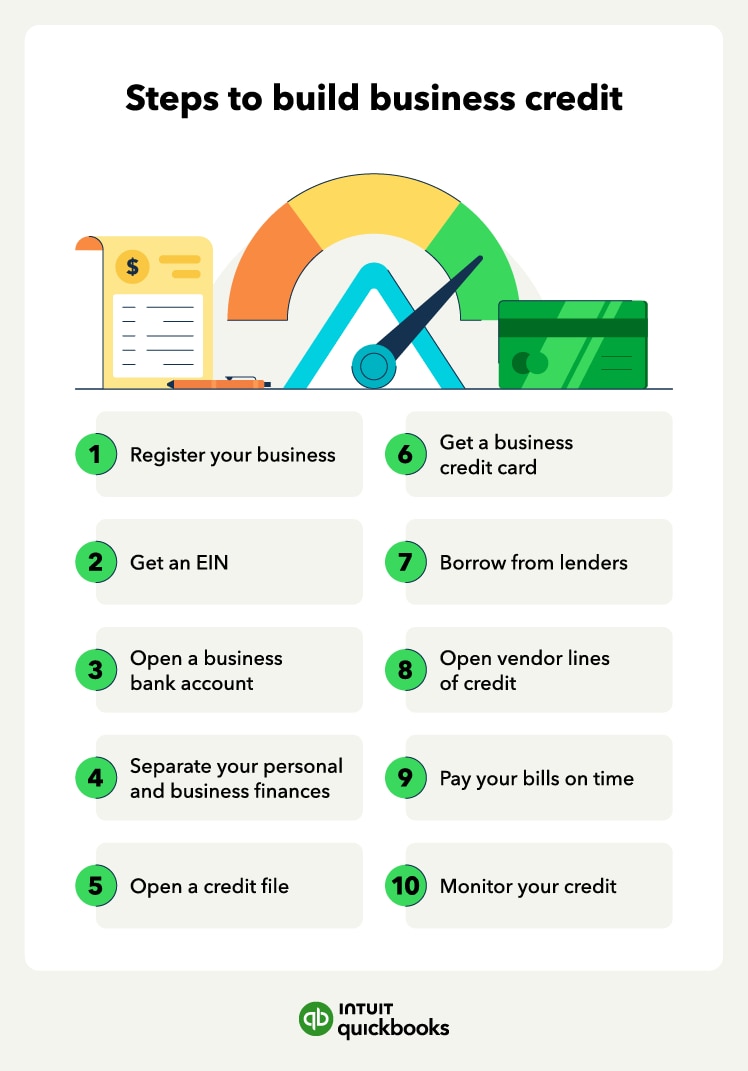
The first step in building business credit is legally registering the business. Companies must establish a formal business structure such as a Limited Liability Company (LLC), partnership, or corporation.
Registering the business ensures that it is recognized as a separate legal entity from the owner.
Businesses should also obtain all required licenses and permits to operate legally.
Get an EIN From the IRS
An Employer Identification Number (EIN) is issued by the Internal Revenue Service and serves as a unique identification number for businesses.
An EIN functions similarly to a social security number but is used specifically for business tax purposes.
This number is required when opening business bank accounts, applying for business credit, and filing tax returns.
Open a Business Bank Account
Opening a dedicated business bank account is essential for establishing financial credibility. A business account allows companies to manage income, expenses, and financial transactions separately from personal finances.
Banks may require documentation such as business registration certificates, an EIN, and identification documents when opening accounts.
Maintaining consistent financial activity in the account also demonstrates financial stability to lenders.
Register With Business Credit Bureaus
Business credit bureaus collect financial data about companies and generate business credit scores.
Major business credit bureaus include Dun & Bradstreet, Experian Business, and Equifax Business.
Registering with these bureaus allows businesses to begin building their credit profiles.
Dun & Bradstreet assigns businesses a unique identifier known as a D-U-N-S number, which many lenders use to track business credit activity.
Establish Trade Credit With Vendors
Trade credit is one of the fastest ways to build business credit. Vendors that offer payment terms allow businesses to purchase goods or services and pay for them later.
Common payment terms include net-30 or net-60 arrangements, which give businesses 30 or 60 days to pay invoices.
When businesses pay vendor invoices on time, these payments are reported to credit bureaus and contribute to building business credit.
Apply for a Business Credit Card
Business credit cards provide another opportunity to build credit history. Responsible use of credit cards demonstrates financial discipline and repayment reliability.
Business owners should use credit cards for business-related purchases and pay balances on time each month.
Maintaining low credit utilization and avoiding late payments helps improve credit scores.
Pay Bills on Time
Payment history is one of the most important factors in building business credit. Late payments can negatively impact credit scores and make it more difficult to obtain financing.
Businesses should establish payment reminders or automated payment systems to ensure bills are paid before their due dates.
Consistently paying debts on time demonstrates financial reliability to lenders and credit agencies.
Monitor Business Credit Reports
Monitoring business credit reports helps ensure that financial data is accurate and up to date.
Business owners should review reports regularly to identify errors, incorrect balances, or fraudulent activities.
Correcting inaccuracies quickly prevents unnecessary damage to credit scores.
Many credit bureaus provide monitoring tools that allow businesses to track their credit performance over time.
Avoid Excessive Debt
While credit is important for building financial history, excessive borrowing can harm business credit scores.
Businesses should borrow only what they can realistically repay. Maintaining a healthy balance between available credit and outstanding debt helps keep credit profiles strong.
Managing debt responsibly demonstrates financial stability and improves relationships with lenders.
Building business credit takes time, but following the right strategies can accelerate the process. Registering the business properly, obtaining an EIN, opening business bank accounts, establishing trade credit, and maintaining responsible payment habits all contribute to strong credit profiles. By developing good financial practices and monitoring credit activity regularly, businesses can build strong credit histories that open the door to better financing opportunities and long-term growth.