
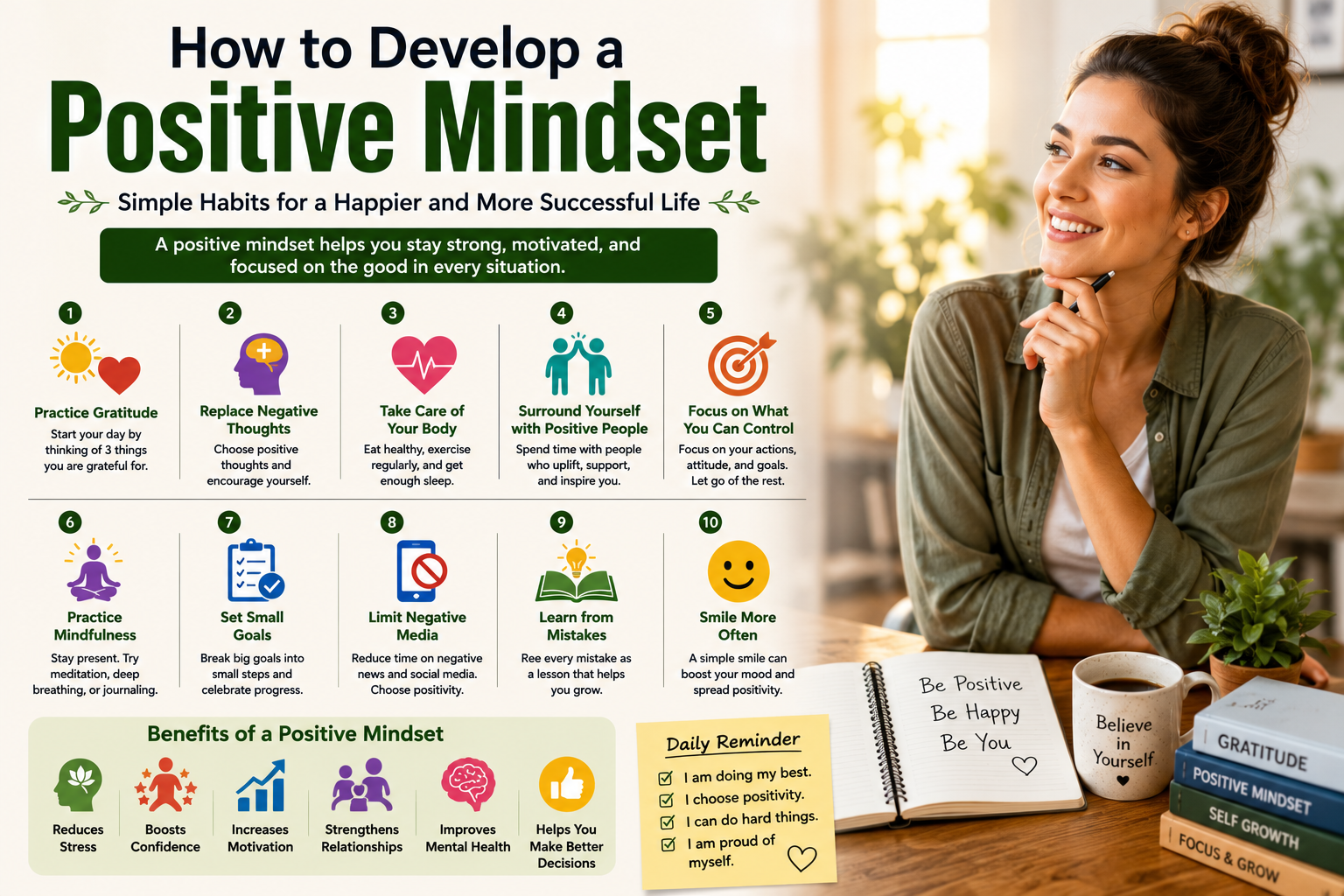
How to Develop a Positive Mindset
A positive mindset can transform the way you think, feel, and respond to life’s challenges. While everyone faces difficult situations, having a positive outlook helps you stay motivated, build resilience, and focus on solutions instead of problems.
Developing a positive mindset doesn’t happen overnight. It takes consistent effort, healthy habits, and a willingness to grow. The good news is that anyone can learn to think more positively with daily practice.
What Is a Positive Mindset?
A positive mindset means looking at situations with optimism while staying realistic. It doesn’t mean ignoring problems—it means believing that you can overcome them and learn from every experience.
People with a positive mindset often:
- Stay calm during challenges
- Believe in personal growth
- Focus on solutions
- Learn from mistakes
- Encourage themselves instead of giving up
1. Start Your Morning with Gratitude
The first few minutes of your day can shape your mood.
Before checking your phone, think of three things you’re grateful for. They can be as simple as your family, good health, or a sunny morning.
Practicing gratitude daily helps shift your focus from problems to blessings.
2. Replace Negative Thoughts
Everyone experiences negative thoughts, but don’t let them control your day.
Instead of saying:
❌ “I’ll never succeed.”
Try saying:
✅ “I’ll keep learning and improving.”
Positive self-talk builds confidence over time.
3. Take Care of Your Body
A healthy body supports a healthy mind.
Simple habits include:
- Eat nutritious meals
- Drink enough water
- Exercise regularly
- Sleep 7–9 hours every night
Good physical health often improves your mood and energy.
4. Surround Yourself with Positive People
Spend time with people who inspire, encourage, and support you.
Positive relationships can help you stay motivated and confident.
5. Focus on What You Can Control
Many things in life are outside your control.
Instead of worrying about everything, focus on:
- Your actions
- Your attitude
- Your habits
- Your goals
This mindset reduces unnecessary stress.
6. Practice Mindfulness
Mindfulness helps you stay present instead of worrying about the past or future.
Simple ways to practice mindfulness:
- Deep breathing
- Meditation
- Walking outdoors
- Writing in a journal
Even 10 minutes a day can help you feel calmer.
7. Set Small Achievable Goals
Large goals can feel overwhelming.
Break them into smaller steps and celebrate each success.
Small victories build confidence and keep you motivated.
8. Limit Negative Media
Too much negative news or social media can affect your mood.
Try to:
- Follow educational content
- Read inspiring books
- Listen to positive podcasts
- Take regular breaks from your phone
9. Learn from Every Mistake
Mistakes are a natural part of growth.
Ask yourself:
- What did I learn?
- How can I improve?
- What will I do differently next time?
Every mistake is an opportunity to become stronger.
10. Smile More Often
Smiling may seem simple, but it can improve your mood and help you feel more positive.
Smile when you greet others, spend time with loved ones, or enjoy your favorite activities.
Daily Positive Mindset Checklist
✔ Practice gratitude
✔ Drink enough water
✔ Exercise regularly
✔ Think positively
✔ Read something inspiring
✔ Spend time outdoors
✔ Sleep well
✔ Celebrate small achievements
Benefits of a Positive Mindset
Developing a positive mindset may help you:
- Reduce everyday stress
- Improve self-confidence
- Increase motivation
- Build stronger relationships
- Make better decisions
- Improve emotional well-being
- Support a healthier lifestyle
Common Mistakes to Avoid
Avoid these habits:
Expecting perfection
Comparing yourself to others
Constant negative self-talk
Ignoring self-care
Holding onto past mistakes
Spending too much time on social media